Waterproofing is one of the most important aspects of modern construction. Whether it is a residential building, a commercial project, a tunnel, or a dam, protecting structures from water damage is critical for long-term durability and safety.
One natural material that has become extremely valuable for waterproofing applications is Bentonite Powder. This natural clay mineral has unique swelling and sealing properties that make it highly effective in preventing water leakage in construction and infrastructure projects.
When bentonite comes into contact with water, it expands and forms a dense, impermeable barrier. This ability to swell and seal cracks makes bentonite powder one of the most reliable waterproofing materials used in the construction industry.
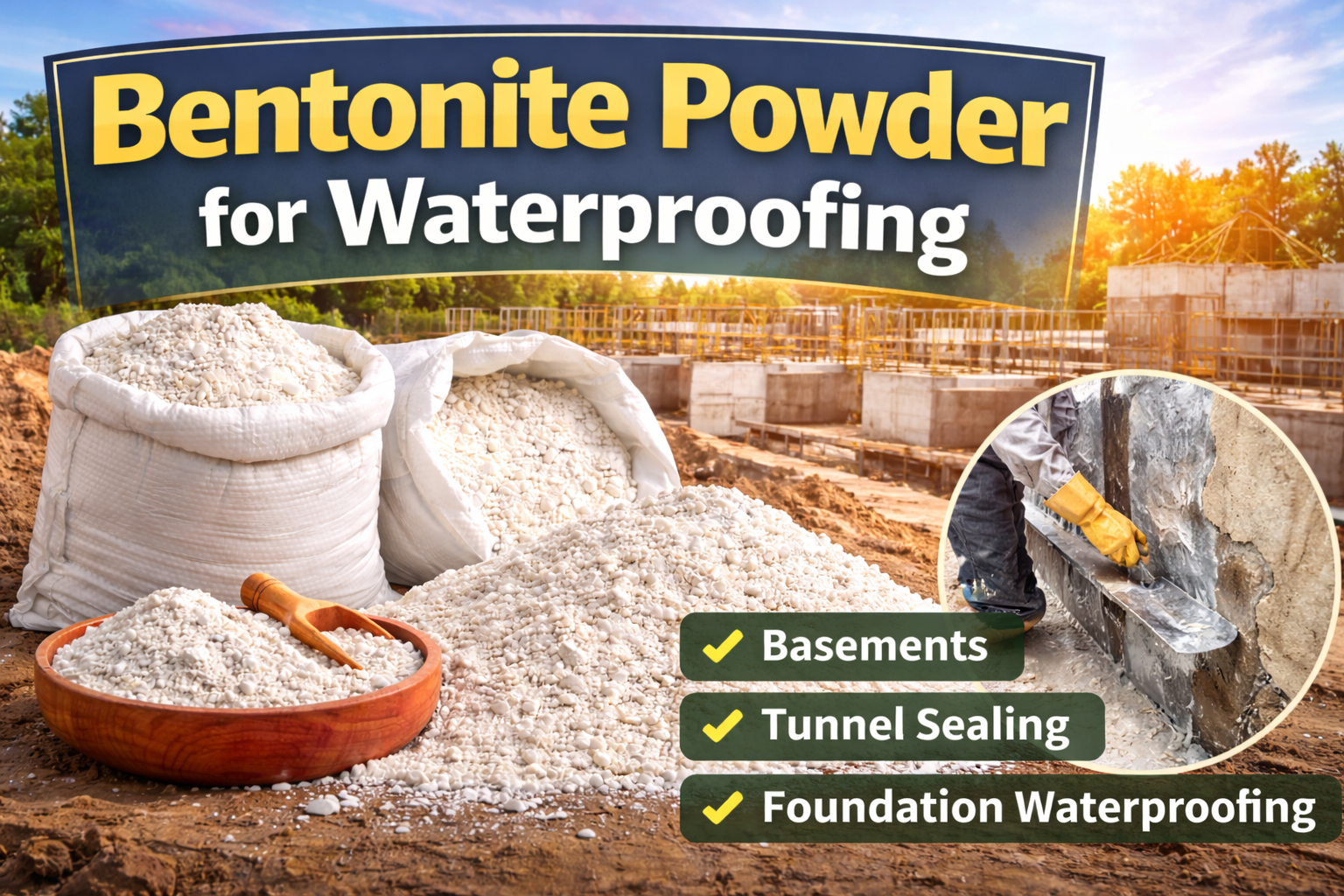
In fact, bentonite is widely used in projects such as basements, underground structures, tunnels, foundations, dams, and landfill liners.
If you are exploring the broader industrial importance of bentonite, you can also read our detailed article on Bentonite Powder Uses in Different Industries:
https://bentonitepowder.com/bentonite-powder-uses/
This guide will explain everything about Bentonite Powder for Waterproofing, including how it works, where it is used, and why it is becoming increasingly popular in modern construction.
What is Bentonite Powder?
Bentonite Powder is a natural clay mineral formed from volcanic ash deposits over millions of years. It mainly consists of the mineral montmorillonite, which gives bentonite its unique swelling characteristics.
When bentonite powder absorbs water, it can expand several times its original volume and form a thick gel-like substance. This property makes it ideal for sealing cracks and preventing water infiltration.
Because of these properties, bentonite is widely used in industries such as drilling, construction, agriculture, water treatment, and environmental protection.
If you want to understand how bentonite works in drilling operations, you can read this article:
https://bentonitepowder.com/bentonite-powder-oil-gas-industry/
Why Bentonite Powder is Ideal for Waterproofing
Waterproofing materials must meet several important requirements. They must resist water pressure, seal cracks effectively, and remain durable for long periods.
Bentonite powder meets all these requirements due to the following properties.
High Swelling Capacity
When bentonite comes into contact with water, it expands significantly. This expansion allows it to fill gaps and create a tight seal that blocks water penetration.
Self-Sealing Ability
One of the most remarkable properties of bentonite is its ability to self-heal. If small cracks or punctures occur in the waterproof layer, bentonite absorbs moisture and expands again to seal the gap.
Natural and Environmentally Friendly
Unlike many synthetic waterproofing chemicals, bentonite is a natural mineral and environmentally safe.
Long-Term Durability
Bentonite waterproofing systems can last for decades because the clay remains stable underground.
Cost-Effective Solution
Compared to complex synthetic waterproofing systems, bentonite is relatively affordable and easy to apply.
How Bentonite Waterproofing Works
The waterproofing mechanism of bentonite is based on its swelling and sealing properties.
When bentonite powder is exposed to water:
-
It absorbs water rapidly.
-
The clay particles expand.
-
A thick gel layer forms.
-
This gel creates an impermeable barrier.
This barrier prevents water from passing through concrete structures or soil layers.
Because of this ability, bentonite is often used in areas where water pressure is high or groundwater levels are significant.
Bentonite Waterproofing in Construction Projects
Bentonite powder is widely used in modern construction projects for waterproofing applications.
Below are some of the most common uses.
Basement Waterproofing
Basements are highly vulnerable to water seepage because they are located below ground level.
Groundwater pressure can cause cracks and leaks in basement walls and floors.
Bentonite waterproofing systems are often installed around basement walls to prevent water infiltration.
These systems typically involve bentonite panels or bentonite membranes that expand when exposed to water, creating a protective barrier.
Foundation Waterproofing
Building foundations must remain strong and stable for decades.
Water infiltration can weaken concrete and cause structural damage.
Bentonite powder is used in foundation waterproofing systems to prevent groundwater from entering foundation walls.
It is commonly used in:
-
Residential foundations
-
Commercial buildings
-
Industrial structures
Tunnel Waterproofing
Tunnels are often constructed below ground or under water bodies, making waterproofing essential.
Bentonite clay is frequently used in tunnel construction to seal joints and prevent water seepage.
Because of its ability to expand under water pressure, bentonite helps maintain tunnel integrity and safety.
Dam Construction
Dams must prevent water leakage to maintain their structural stability.
Bentonite clay is used in dam cores and embankments to create impermeable barriers.
This helps control water flow and reduces the risk of structural failure.
Landfill Liners
Landfills require special waterproof liners to prevent toxic chemicals from contaminating groundwater.
Bentonite clay is widely used in landfill liner systems because it forms a highly effective sealing layer.
This helps protect the environment from hazardous waste leakage.
Bentonite Waterproofing Methods
There are several methods for applying bentonite in waterproofing systems.
Bentonite Powder Application
In some projects, bentonite powder is directly applied to soil or construction surfaces.
When moisture enters the area, the bentonite swells and forms a waterproof barrier.
Bentonite Mats
Bentonite mats, also known as geosynthetic clay liners, contain bentonite clay sandwiched between layers of geotextile fabric.
These mats are installed in construction projects to provide waterproof protection.
Bentonite Membranes
Bentonite membranes are flexible sheets containing bentonite clay.
They are commonly used in foundation waterproofing systems.
Bentonite Waterproofing vs Traditional Waterproofing
Traditional waterproofing methods often rely on chemical coatings, bitumen layers, or synthetic membranes.
While these systems can be effective, they may degrade over time.
Bentonite waterproofing offers several advantages:
-
Self-healing capability
-
Natural material
-
Long lifespan
-
Better resistance to underground water pressure
Because of these benefits, bentonite waterproofing systems are becoming more popular in large infrastructure projects.
Importance of High-Quality Bentonite Powder
The performance of waterproofing systems depends on the quality of bentonite used.
High-quality bentonite ensures:
-
Better swelling capacity
-
Strong sealing performance
-
Long-lasting durability
Reliable manufacturers play an important role in providing consistent quality.
If you are looking for a trusted supplier, you can read:
https://bentonitepowder.com/bentonite-powder-supplier-in-india/
Bentonite vs Other Industrial Minerals
While bentonite is widely used in waterproofing and drilling applications, other minerals are used in food, pharmaceutical, and industrial applications.
For example, calcium carbonate is commonly used in food and pharmaceutical industries.
You can read more about it here:
https://bentonitepowder.com/calcium-carbonate-food-grade-uses-benefits-specifications-fcc-certified-manufacturer-in-india/
Advantages of Bentonite Waterproofing Systems
Using bentonite powder in waterproofing provides several advantages.
Self-Healing Capability
Bentonite can seal small cracks automatically.
Strong Waterproof Barrier
It forms a dense barrier that prevents water infiltration.
Environmentally Safe
Bentonite is a natural mineral with minimal environmental impact.
Easy Installation
Bentonite systems can be installed quickly in construction projects.
Long Service Life
Bentonite waterproofing systems can last for decades.
Future of Bentonite Waterproofing
As construction projects become larger and more complex, the demand for reliable waterproofing solutions is increasing.
Bentonite waterproofing systems are expected to play a major role in future infrastructure projects because they provide:
-
Durable sealing
-
Environmentally friendly protection
-
Cost-effective solutions
With growing urbanization and infrastructure development worldwide, the use of bentonite in construction will continue to expand.
Conclusion
Bentonite powder has become an essential material in waterproofing applications due to its exceptional swelling and sealing properties.
From basement waterproofing to tunnel construction and landfill liners, bentonite plays a crucial role in protecting structures from water damage.
Its natural composition, long-term durability, and self-healing capabilities make it one of the most effective waterproofing materials available today.
As infrastructure projects continue to grow globally, bentonite waterproofing systems will remain an important solution for construction and environmental protection.
Frequently Asked Questions (FAQ)
What is bentonite waterproofing?
Bentonite waterproofing is a construction method that uses bentonite clay to create an impermeable barrier that prevents water infiltration in buildings and infrastructure.
How does bentonite stop water leakage?
Bentonite absorbs water and expands, forming a dense gel layer that blocks water from passing through.
Is bentonite waterproofing durable?
Yes. Bentonite waterproofing systems can last for decades because the clay remains stable underground.
Where is bentonite waterproofing used?
Bentonite waterproofing is used in basements, foundations, tunnels, dams, and landfill liners.
Is bentonite environmentally friendly?
Yes. Bentonite is a natural mineral and is considered environmentally safe compared to synthetic waterproofing chemicals.