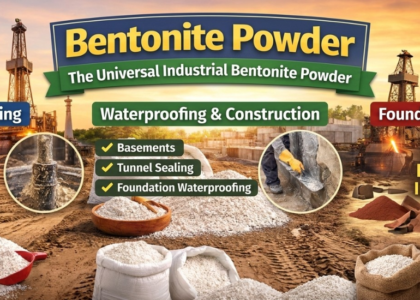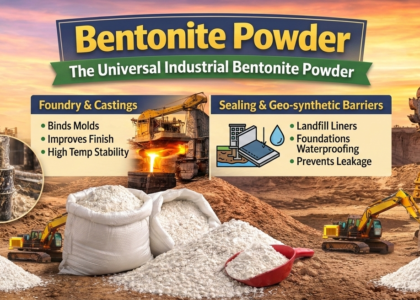
Bentonite is one of the most important ingredients used in the drilling mud for oil and gas wells. When mixed with water, Bentonite forms a thick, gel-like fluid that plays a crucial role in making the drilling process smooth, safe, and efficient. Without Bentonite, deep drilling would be difficult and riskier.
How Bentonite Helps in Drilling
During drilling, the drill bit cuts through hard rock layers, generating heat, friction, and rock cuttings. Bentonite-based drilling mud solves many challenges at the same time. Here’s how:
1. Cooling and Lubricating the Drill Bit
The drill bit can get extremely hot while cutting through rocks.
Bentonite mud continuously circulates around the drill bit, cooling it down and reducing friction. This protects the equipment and increases drilling speed.
2. Transporting Rock Cuttings to the Surface
As the bit drills deeper, small rock particles (cuttings) are produced.
Bentonite thickens the drilling fluid, helping it carry these cuttings to the surface, keeping the borehole clean and preventing blockage.
3. Stabilising the Borehole Walls
Deep underground formations can be unstable and can collapse easily.
Bentonite forms a strong gel that supports the sides of the borehole, preventing cave-ins and ensuring drilling continues safely.
4. Controlling Formation Pressure
High underground pressure is common while drilling for oil or gas.
Bentonite mud helps maintain balanced pressure so that oil, gas, or water do not rush upward suddenly, preventing blowouts and accidents.
5. Sealing and Reducing Fluid Loss
Bentonite creates a thin protective layer called filter cake on the borehole walls.
This layer prevents mud and water from leaking into surrounding rocks, keeping the drilling fluid stable and reducing loss.
6. Helps in Suspension
Even when drilling stops temporarily, the gel strength of Bentonite keeps the rock cuttings suspended, preventing them from settling at the bottom.
Summary
Bentonite is used in oil & gas drilling mud because of its ability to:
-
Cool and lubricate the drill bit
-
Carry cuttings to the surface
-
Stabilise the borehole walls
-
Control pressure and prevent dangerous blowouts
-
Seal the well and reduce fluid leakage
Its natural swelling and gel-forming properties make it an essential material for modern drilling operations.